Rec · 36 pages
The Memory Encyclopedia
In Rembobine, every monster you meet opens a page in the binder up in the attic: what it does in the game, then a true story about the real object it comes from. Here are all 36 pages, no need to play to read them. Dates and numbers were checked one by one; when we weren't sure, we left the date out.
Minions

Crazy Top
In the game It aims, then charges in a straight line. Dodge to the side.
The real memory Beyblade battle tops came out in Japan in July 1999, from Takara, alongside a manga. They hit schoolyards everywhere in the early 2000s.

Tape-Stuck Kid
In the game Never looks up from his screen and fires fans of notifications at you.
The real memory The first text message was sent on December 3, 1992, by Neil Papworth, a 22-year-old engineer. It said “Merry Christmas.” The recipient couldn't reply: phones couldn't type yet.

Marble Squirrel
In the game It takes aim, then fires a fan of marbles.
The real memory On the playground, kids played “pot”: a little hole dug in the dirt, and you had to flick your marble into it. Aggies and shooters were worth several regular marbles.

Dodgeball
In the game It bounces off the walls and never stops.
The real memory In French dodgeball, whoever gets hit goes behind the other team's side. They can come back in by hitting someone in turn: nobody's ever out for good.

Mean Chalk
In the game They attack in packs. One isn't scary. Four is.
The real memory Blackboard chalk is almost never real chalk (limestone): it's mostly gypsum, the same stuff as plaster.

The Big Fifth-Grader
In the game The playground mini-boss: he charges, slams the ground, then runs out of breath. That's when you hit him.
The real memory In France, CM2 is the last year of elementary school. The schoolyard “big kids” are 10 or 11, and the next year they're the littlest again, in middle school.

Jump-Band Kid
In the game Two kids stretch a band that sweeps the yard. Take one out and the band snaps.
The real memory In Chinese jump rope, two players hold the band around their legs while the third jumps and sings a rhyme. With each level cleared, the band goes up: ankles, knees, then thighs.
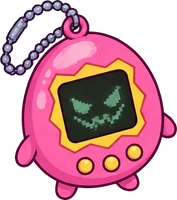
Virtual Egg
In the game It lays pixels and evolves if you let it live. Break it first.
The real memory The Tamagotchi came out in Japan on November 23, 1996, from Bandai. Its name blends two words: “tamago” (egg, in Japanese) and “watch.”

Pixel
In the game A tiny square of LCD screen, laid by the eggs.
The real memory The Game Boy screen was 160 by 144 pixels, in four shades of gray-green. It had no backlight: you played near a lamp, or bought a magnifier with a light.
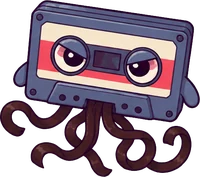
Tangled Tape
In the game It fires a beam of magnetic tape across the bedroom.
The real memory Philips unveiled the audio cassette on August 30, 1963, at the Berlin Radio Show. When the tape got tangled, you wound it back by hand with a pencil in the sprocket.

Raging Pog
In the game It throws discs that bounce off the walls.
The real memory POG was first a Hawaiian juice, from 1971: Passion, Orange, Guava. The cardboard caps on its milk bottles gave their name to the game, which came back into fashion in Hawaii in 1991.

Crybaby Doll
In the game She cries and sends everyone else into a rage. Shut her up first.
The real memory Baby dolls that drank from a bottle and cried real tears were among the Christmas gifts most often circled in marker in toy catalogs.

Virtual Poop
In the game Left by Tamagoyle. Shoot it in time or it turns into a toxic puddle.
The real memory A Tamagotchi made little poops on screen that you had to clean up with a button. Otherwise, it got sick. Lots of schools ended up banning these virtual pets in class.
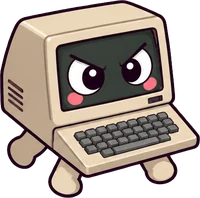
Grumpy Modem
In the game It downloads its attack strip by strip: back off faster than it loads.
The real memory The Minitel, France's pre-web terminal, shut down for good on June 30, 2012, thirty years after it went live. Nearly two million people were still using it.

Ball Mouse
In the game Plugged into the wall, its cord sweeps the living room. It charges on a double-click.
The real memory Douglas Engelbart showed the mouse to the public on December 9, 1968, in San Francisco. Mice in the 2000s had a ball underneath that you popped out to scrape the gunk off the little rollers.

Burned CD
In the game It flies out and back like a boomerang. Broken, it cracks into two shards.
The real memory A 700 MB recordable CD holds 80 minutes of music. You wrote the title on it in marker, in careful handwriting, with one spelling mistake.
CD Shard
In the game Half a scratched CD, ricocheting around.
The real memory On a CD, the music sits just under the label, not on the shiny side. A scratch on the label side does more damage than one on the mirror side.

Pop-up Window
In the game It opens wherever it wants, shoots, then closes. Hit it while it's open.
The real memory Ethan Zuckerman, who wrote the code for the first pop-up ad in the late 1990s, publicly apologized in 2014: “I'm sorry. Our intentions were good.”

Online Buddy
In the game While they're online, the Snake is “Away.” They send Nudges.
The real memory MSN Messenger launched on July 22, 1999. The service shut down in 2013, replaced by Skype. You chose your screen name with care, full of symbols and song lyrics.

Pixel Apple
In the game If the Snake eats it, it grows and speeds up. Shoot it first.
The real memory Snake was programmed by Taneli Armanto, a Nokia engineer, for the Nokia 6110 in 1997. It ended up on hundreds of millions of phones.
Bosses

The Recess Queen
In the game Red light, green light, hopscotch, tag and freeze tag. She gets mad when the bell rings.
The real memory In hopscotch, the first square is often called “Earth” and the last “Heaven.” In France, Red Light, Green Light is “1, 2, 3, Soleil”; in Britain, it's “Grandmother's Footsteps.”
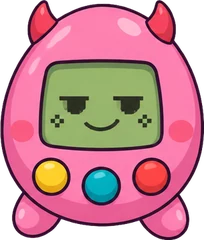
Tamagoyle
In the game It wants food, play, a bath. Get to the right button.
The real memory The Tamagotchi was dreamed up by Aki Maita at Bandai, with Akihiro Yokoi. Released in Japan in 1996, it went worldwide in 1997, and tens of millions were sold.

The 33-10 Snake
In the game It never turns back. Circle around it: it ends up biting its own tail.
The real memory The Nokia 3310 was unveiled in September 2000, with Snake II. Indestructible, it became one of the best-selling phones of its time.
Friends
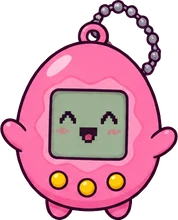
Tamachoo
In the game The healer friend. His boons restore HP.
The real memory The name “Tamagotchi” comes from “tamago,” Japanese for egg. The toy fit in your palm, on a little chain, and often hung from your school bag.

Billo
In the game The friend of ricocheting marbles and critical hits.
The real memory A shooter is a big marble. On the playground it was worth several regular marbles, and you only played it when you were sure to win.

Scoobi
In the game The friend of chains: he ties up and slows down.
The real memory The scoubidou, France's word for lanyards, is named after a Sacha Distel song, “Scoubidou,” a number one in France in 1959, just as these braids of plastic string were all the rage.

Tapey
In the game The rhythm friend: hit on the beat of the music.
The real memory Independent “free radio” stations were legalized in France by the law of November 9, 1981. Within a year, nearly 2,000 stations popped up on the FM dial: enough to fill whole tapes.
Items
The Game Bloc
In the game The console under the attic TV. It's your way into the memories.
The real memory The real one, the Game Boy, came out in Japan in April 1989 and in Europe in September 1990, with Tetris in the box.

Super Drencher 2000
In the game Nath's water gun. Rapid fire at range.
The real memory The Super Soaker was invented by Lonnie Johnson, an engineer who worked for NASA. It came out in 1990 as the Power Drencher, before being renamed the following year.

Glow Yo-yo
In the game It goes through everything, out and back.
The real memory In April 1985, a yo-yo went to space aboard the shuttle Discovery, to show schoolkids how toys behave in zero gravity. It “sleeps” just as well up there.

Dodgeball
In the game Slow and heavy, it bounces from enemy to enemy.
The real memory In many schools, foam gym balls replaced leather ones: they hurt less, but they still smack just as loud.

Candy
In the game The run's currency, at Mrs. Ferret's. Lost at the end.
The real memory The Tagada Strawberry was born in 1969 at the Haribo factory in Marseille. Its name comes from “Tagada tsoin tsoin,” a refrain sung by music-hall dancers.

Marbles
In the game Kept when you die. The Pencil Case and the Christmas Wish Book trade them.
The real memory “Cat's-eye” marbles, with their twist of color inside, were the most common ones in the mesh bags sold at the corner tobacco shop.

Candy Shell
In the game The friends' gift: each one is worth a heart in the Friendship Book.
The real memory The roudoudou is a candy poured into a real seashell, which you licked for hours. The rim of the shell cut your tongue a little: that was part of the fun.

Gold Star
In the game The currency for weapon aspects.
The real memory In French schools, the teacher handed out “bons points” (merit cards); ten of them earned you a picture card. The tradition is very old: great-grandparents already got them.
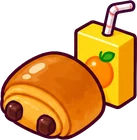
After-School Snack
In the game Chocolate croissant and apple juice: restores a good third of your HP.
The real memory In France, the 4:30 p.m. after-school snack is also called the “quatre-heures” (the “four o'clock”). It's one of the few meals eaten standing up, backpack still on.