Roguelites
What is a roguelite? A plain-English guide
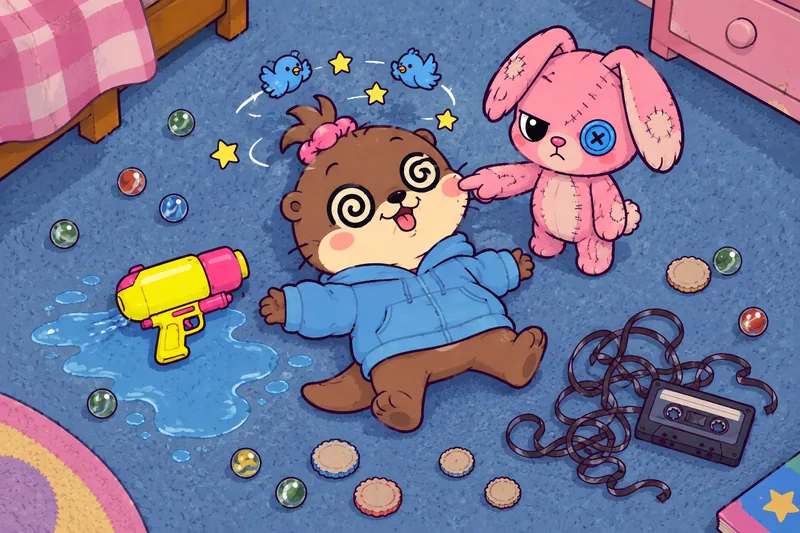
If you last played video games when save points and lives were the rule, the word “roguelite” can be confusing. Your teenage nephew says Hades is one. So is a card game, so is a game where a potato fights aliens. Here’s what the word actually means, where it comes from, and why this genre fits so well into a parent’s evening.
The short answer
A roguelite is a game where you play in runs. Each run sends you through levels that are shuffled or generated at random. When you die, the run is over and you start again from the beginning. But you keep something: money to spend on upgrades, a new weapon, a bit more story. Each attempt makes the next one slightly easier, and you get better as a player too.
Everything else is history and hair-splitting.
Where the name comes from: Rogue (1980)
Around 1980, two students at the University of California, Santa Cruz, Michael Toy and Glenn Wichman, wrote Rogue, a dungeon game for Unix computers. Everything was drawn with letters and symbols: you were an @, monsters were letters. Three ideas made it stand out:
- The dungeon was generated randomly every time, so you couldn’t memorize it.
- Death was permanent. No reloading a save. Game over meant starting a new character.
- Turns. Nothing moved until you did, so you had all the time in the world to think.
Rogue spread widely, inspired games like NetHack and Angband, and the games built in its image became known as “roguelikes.”
The Berlin Interpretation (2008)
By the 2000s, fans argued about what counted as a roguelike. At the International Roguelike Development Conference in Berlin in 2008, players and developers wrote down a list of “high-value factors,” now called the Berlin Interpretation. Among them: random dungeons, permadeath, turn-based play, movement on a grid, resource management, and items you have to identify by trying them.
It was meant as a yardstick, not a law, and it describes classic games like NetHack very well. But by that standard, most modern hits like Hades aren’t roguelikes at all: they’re real-time and have no grid.
Roguelike vs roguelite
That gap is where “roguelite” (also written “rogue-lite”) came from. Games like Spelunky (2008) and The Binding of Isaac (2011) kept the random levels and the permadeath, but dropped turns and grids for fast action. Many also added meta-progression: things you unlock or buy between runs that stay forever.
| Roguelike (strict) | Roguelite | |
|---|---|---|
| Random levels | Yes | Yes |
| Death ends the run | Yes | Yes |
| You keep things between runs | No (just your knowledge) | Yes: upgrades, unlocks, story |
| Pace | Usually turn-based | Often real-time action |
| Classic examples | Rogue, NetHack, Dungeon Crawl Stone Soup | Hades, Dead Cells, The Binding of Isaac |
In practice, the line is blurry and people use “roguelike” for both. Stores and players often tag the same game with both words. Don’t sweat it.
What is meta-progression?
It’s the part that makes losing bearable. In Hades, you come home after every death and spend what you collected to unlock permanent bonuses. In Rogue Legacy, your gold pays for upgrades for the next hero. In Rembobine, the game made by this site, you keep your marbles and spend them in the Pencil Case.
For a beginner, this matters a lot. In a strict roguelike, a bad night is just a bad night. In a roguelite, a bad night still buys you something.
Why roguelites fit a busy evening
Parents who come back to games often have the same problem: a 60-hour story game is hard to follow when you play twice a week, 40 minutes at a time. Roguelites solve that.
- Runs are short. Often 15 to 40 minutes for a good one, much less for a bad one.
- You don’t need to remember the plot. Each run stands on its own.
- Stopping is natural. You finish a run, and that’s a clean place to stop.
- Progress is visible. Even after a loss, you unlock something.
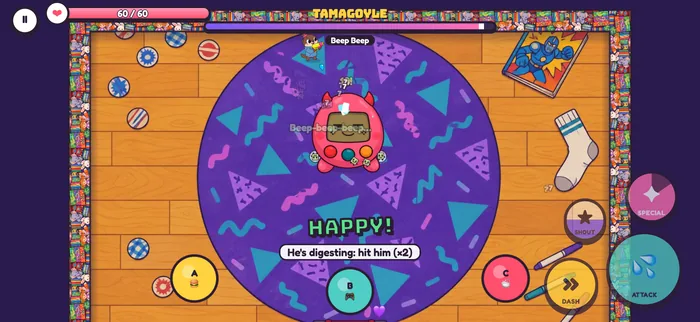
Why are roguelites so addictive?
The same things that make them easy to fit into an evening make them hard to put down. A run is short, so “one more” sounds harmless. Every run is a little different, so you’re curious about what you’ll find. And a loss almost always gives you something to spend, so you start the next run with a small reward.
A practical tip: set a number of runs, not a time limit. “Two runs and bed” works better than “until 11,” because a run that ends at 10:58 makes you want just one more.
Easy roguelites for beginners
These are roguelites with a real way to lower the difficulty, or that are gentle by design. Platforms were checked in October 2026.
Hades (PC, Switch, PlayStation, Xbox)
The best-known action roguelite, and one of the kindest to newcomers thanks to God Mode: you start with 20% damage resistance, and it grows by 2% each time you die. You still have to play well, it just forgives more. The sequel, Hades II, has the same option.
Dead Cells (PC, consoles, iPhone, Android)
A side-scrolling action game known for being tough, but the 2022 “Breaking Barriers” update added an Assist Mode: you can choose extra lives, lower enemy and trap damage, auto-hit and more.
Cult of the Lamb (PC, PlayStation, Xbox, Switch)
Short dungeon runs mixed with managing a little village of followers. It has an Easy difficulty you can switch to from the settings, and the base-building half gives you a break from fighting.
Vampire Survivors (PC, consoles, iPhone, Android)
You only move; your weapons fire on their own. It’s nearly impossible to bounce off, and it’s free on phones (with optional ads). A good way to understand the “build gets stronger during a run” loop without having to aim.
Slay the Spire (PC, consoles, iPhone, Android)
A card game roguelite, turn-based, so there’s no reflex pressure at all. You can pause mid-fight for as long as you want, which is perfect when a kid calls from upstairs. A sequel entered early access on PC in March 2026.
A word on Rembobine, our game
This site exists for Rembobine, so you should know it’s our game, an action roguelite in the vein of Hades and The Binding of Isaac. You play Nath, a 38-year-old otter mom who goes through her own 1990s childhood to pull her 8-year-old son Leo out of his tablet. A run is one evening across three floors, the schoolyard (1996), the bedroom (1999) and the TV living room (2003), and a win takes about 15 to 20 minutes.
We built it with the parents described above in mind. Every enemy attack is marked on the floor before it hits, the dash makes you invulnerable, and Cuddle Mode takes 20% off the damage you take, then 2% more after each defeat, up to 60%. It runs in your browser on a computer or a phone held sideways, and the whole first evening is free. After that, the schoolyard stays free and the full game is €9.99, once. No ads, no subscription.
If you want to see what a roguelite feels like without installing anything, start a run of Rembobine in your browser. And if it’s not your thing, our list of games like Hades has plenty of other places to start.
Questions
What is the difference between a roguelike and a roguelite?
In a strict roguelike, death wipes everything and you start from zero. A roguelite keeps the random levels and the restart on death, but lets you carry something over between runs: currency, upgrades, new weapons or story progress. In everyday use, many people say roguelike for both.
Are roguelites good for beginners?
Many are, because every run teaches you something and permanent upgrades make the next attempt easier. Pick one with an assist or easy mode, like Hades (God Mode), Dead Cells (Assist Mode) or Cult of the Lamb (Easy difficulty).
Why are roguelites so addictive?
Runs are short, every run is a little different, and even a loss usually gives you something to spend. That makes 'one more try' feel cheap. If that's a worry, set a number of runs before you start rather than a time.
How long is a run in a roguelite?
It depends on the game. A Vampire Survivors stage lasts up to about 30 minutes, a winning run in Hades or Rembobine often takes 15 to 30 minutes, and a failed run can be over in five.
What was the first roguelike?
Rogue, written around 1980 by Michael Toy and Glenn Wichman, students at UC Santa Cruz at the time. The whole genre is named after it.